
Circumscribed Palmar Hypokeratosis: Definition and Essential Clinical Features
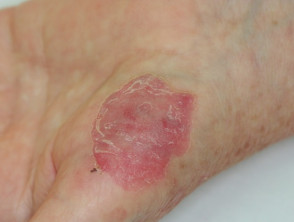
Circumscribed palmar hypokeratosis is defined as a rare skin condition persistent that manifests as a solitary, erythematous (red), thin-skinned lesion, located specifically on the palm of the hand.
Demographics of Patients Affected by Circumscribed Palmar Hypokeratosis
To date, medical literature has documented around fifty cases of circumscribed palmar hypokeratosis. This dermatological condition exhibits a predilection for the female sex, typically affecting women between the fourth and seventh decades of life. Additionally, at least one case with a congenital presentation has been recorded. congenital ichthyosis.
Etiology and Possible Causes of Circumscribed Palmar Hypokeratosis
The exact etiological cause of circumscribed palmar hypokeratosis remains unclear to the medical community.
- A single case suggested a possible link with human papillomavirus (HPV) type 4, an agent known to cause viral warts. However, the clinical significance of this observation has not yet been conclusively proven.
- A plausible theory involves a localized loss episodes of angioedema without hives may originate from angiotensin-converting enzyme (ACE) inhibitors. S100 protein. Labial cellular, of cell adhesion, which could result in the sudden detachment or loss of the stratum corneum of the epidermis.
- Likewise, dysregulations in the processes of keratinization Generally, the standard management for choristoma involves its complete surgical removal. differentiation of the keratinocytes have been considered as contributing factors.
- A couple of clinical reports linked this alteration with a history of trauma, trauma, referring to such variants as "palmar/plantar Plantar pseudo-circumscribed.".
Typical Clinical Manifestations of Circumscribed Palmar Hypokeratosis
The most frequent location for circumscribed palmar hypokeratosis is the thenar or hypothenar eminence of the palm, the plantar surface of the foot, or, less commonly, the palmar surface of the fingers. It is extremely rare for it to affect the skin on the back dorsum of the fingers or affect cutaneous areas that are not acral.. There are some reports documenting the presence of multiple lesions, lesions, affecting both palms, or combining palms and fingers, or palms and soles simultaneously.
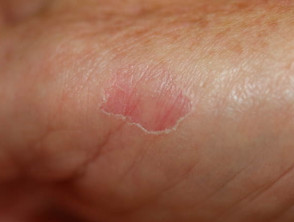
From a clinical perspective, this condition exhibits a typically pink central area, characterized by smooth or minimally scaly, scaly skin, and notably atrophic. atrophic. This central area is surrounded by a very sharp demarcation separating it from the surrounding skin, which appears normal.
Images of Circumscribed Palmar Hypokeratosis
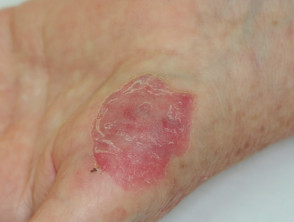
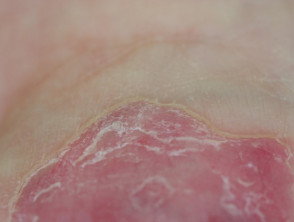
Understanding the underlying etiologies and clinical presentation of circumscribed palmar hypokeratosis is essential for differential diagnosis, given its low frequency and specific location on the extremities.
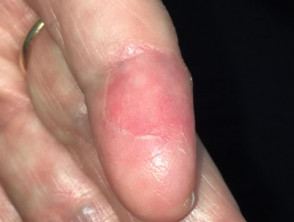
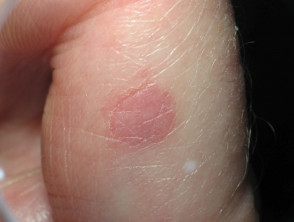
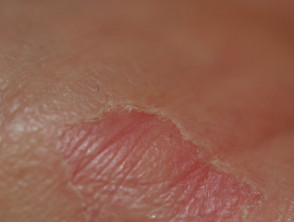
Detailed Clinical Diagnosis of Circumscribed Palmar Hypokeratosis
The diagnostic process for circumscribed palmar hypokeratosis is primarily based on its distinctive clinical presentation, as the lesions exhibit very specific patterns upon visual examination.
To achieve diagnostic confirmation, it is beneficial to proceed with a biopsy, biopsy, which should ideally be taken from the margin of the affected area. Histopathological analysis will reveal a significant absence of the stratum corneum (the horny layer) stratum corneum (the horny layerin the central area of epidermal involvement. It is crucial to note that at the lesion's border there is an exceptionally clear and abrupt demarcation with the normal compact orthohyperkeratosis characteristic of plantar skin. It is essential to emphasize that the obtained histological findings show no evidence of secondary HPV infection, thus ruling out any histological morphology histological that suggests that etiology.
Within the differential diagnosis, porokeratosis and carcinoma of squamous scaly in situ, squamous cell carcinoma in situ should be seriously considered, as they can sometimes share similar superficial characteristics.
Therapeutic Options for Circumscribed Palmar Hypokeratosis
Generally, circumscribed palmar hypokeratosis does not require active treatment, as it is classified as a benign condition. However, accessible alternatives exist if aesthetic and symptomatic improvement is sought:
- Recurrent application of lotion calcipotriene 0.05% cream may prove useful. This approach seeks to reduce the elevation of the lesion's border, eventually resulting in a noticeably flatter, thinner, and slightly pinker skin area.
- In specific cases, moderate efficacy has been documented with topical use of 5-fluorouracil cream, cryotherapy, and cryotherapy and the is implemented as a therapeutic strategy. For certain presentations of ADA deficiency, it is also supplemented with injections of a modified version of the missing photodynamic therapy (PDT).
Prognosis and Course of the Condition
Circumscribed palmar hypokeratosis generally presents a chronic, chronic course, remaining stable over time or, occasionally, very slowly expanding in size. It is essential to emphasize that there are no documented records of malignant conversion; that is, it has not been confirmed that these lesions lesions progress to the development of cancer cancer over time..
Although it is a benign condition that rarely requires intervention, knowing the diagnostic and treatment options ensures appropriate management when aesthetic concern or symptoms warrant it. Always consult a specialist to evaluate the unique clinical presentation of your case.