Discovering Cantharidin: Uses, Mechanism of Action, and Professional Application
Cantharidin is a potent compound extracted from the blister beetle, scientifically known as Cantharis vesicatoria. This substance has a long history in traditional Chinese medicine, where it was used for millennia to treat various conditions. Its introduction to the West occurred in the 1950s as a treatment for warts. However, due to new manufacturing regulations implemented in 1962, it lost its approval from the United States Food and Drug Administration (FDA) and consequently was withdrawn from the market. Its use experienced a significant decline until recent times, when cantharidin was re-evaluated for its ability to eliminate viral warts without leaving scars.
Popularly associated with the «Spanish fly,» the juice of this beetle is often mistakenly marketed as an aphrodisiac. In reality, it lacks efficacy for that purpose and, if ingested, is highly poisonous and potentially lethal.
Mechanism of Action and Therapeutic Applications of Cantharidin
Cantharidin acts as a vesicant agent, causing the formation of a blister directly over the wart or affected skin growth. This superficial action helps lift the skin lesion. After a few days, once the blister has dried, the wart tends to slough off. It is crucial to note that the action of cantharidin is limited to the cells of the outermost layer of the skin (the epidermal layer) Other conditions that cause significant edema in the superficial dermis include mild); the basal layer cell remains intact, which minimizes the risk of scarring.
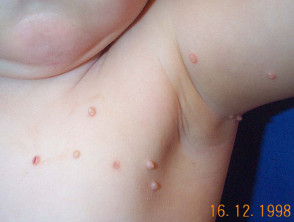
This treatment is effective for managing common viral warts and is particularly effective against molluscum contagiosum. Both conditions are Unlike other skin viral infections that manifest as benign benign lesions small lesions.
Illustrative images of Cantharidin use
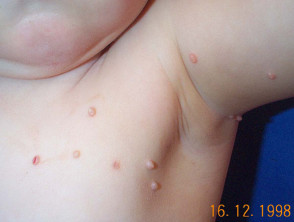
Cantharidin
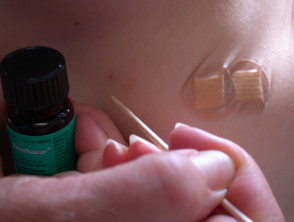
Cantharidin
Correct Procedure for Cantharidin Application
Given the toxic nature toxic of cantharidin, its administration must be strictly restricted to the clinical setting and must be applied topically topically by a medical professional onto the designated lesions.
The cantharidin application protocol generally follows these defined steps:
- First, the physician trims or shaves the hair around the wart (this step is not performed when treating molluscum contagiosum).
- Subsequently, cantharidin, which is usually formulated with additives to create a colloidal or oily film, is applied with high precision over the specific wart or molluscum.
- The liquid must be allowed to dry completely, after which the area is covered and sealed with a non-porous dressing for a period of 4 to 6 hours.
- After this time, the bandage is removed and the treated area is carefully cleaned with soap and water.
- Blister formation usually occurs within 24 to 48 hours following the procedure.
- In the following days, this blister will dry up and the treatment continues its course.
To ensure maximum safety and effectiveness when using cantharidin, it is essential to follow established professional guidelines, as improper application can result in severe irritation or complications.
- The **lesion** may slough off. If necessary, the formed blister can be cut near its base (a local **anesthetic** might be required).
- Generally, the healing process is completed within a span of 4 to 7 days.
- Persistent warts or new molluscum lesions may require repeated treatment sessions.
Essential Precautions When Applying Cantharidin Treatment
The application of cantharidin is contraindicated in the following situations:
- Nevi, birthmarks, or any skin lesion that has not been previously diagnosed.
- Warts or molluscum near **mucous** membranes (such as eyelids, nostrils, or the mouth). Extreme caution should be exercised if applied near the genitals and the **anus**.
It should be used with caution in patients suffering from diabetes, **peripheral** **vascular** disease, or other circulatory disorders, as they have a higher probability of **developing** severe complications.
What Are the Common Side Effects of Cantharidin?
Although the initial application of cantharidin onto the skin lesion is usually not painful, the blister that subsequently forms can cause significant discomfort. In a small percentage of patients, the treatment may cause the appearance of a ring of small satellite warts around the initial viral wart. However, it is important to note that this complication can also be observed with other wart removal methods.
There is a potential risk of complications if this agent is used to treat **plantar** warts located on the soles of the feet. Isolated cases of **inflammation** of the **lymph** ducts (**lymphangitis**) and cellulitis have been reported.
If you do not reside in New Zealand, it is advisable to contact your country's national drug approval agency for detailed information on pharmaceuticals (for example, the Australian Therapeutic Goods Administration and the US Food and Drug Administration) Australian Therapeutic Goods Administration and the and the U.S. Food and Drug Administration.) or consult an approved national or state formulary (such as the New Zealand Formulary and the New Zealand Formulary for Children, as well as the British National Formulary and the British National Formulary for Children). New Zealand Formulary and , New Zealand Formulary for Children, as well as the , British National Formulary and , and British National Formulary for Children).).