«`html
What is a Bird Mite (Fowl Mite)?
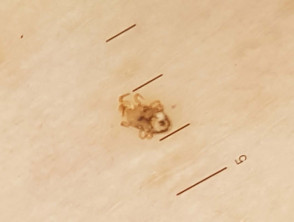
Bird mites are tiny (<1 mm de largo), arácnidos forma ovalada que poseen ocho patas. existen diversas especies ácaros aviares, pero las más comunes afectan a los humanos en australia son el ácaro del estornino doméstico, Ornithonyssus bursaPapillitis lingual transitoria (family Macronyssidae), and the red poultry mite, Dermanyssus gallinae (family Dermanyssidae) [1].
Poultry Mite Infestation
Location and Habitat of Bird Mites
Bird mites are naturally found near bird colonies, such as chicken coops, nests of sparrows, starlings, or pigeons. These parasites thrive in warm, humid conditions, showing greater activity during spring and early summer.
What Does a Bird Mite Infestation Imply?
Bird mites primarily feed on avian blood. Once young birds leave their nests, these parasites may actively seek out humans as alternative hosts for feeding. The mites can bite any area of the human body, although they are most noticeable on exposed skin.
Despite biting people, it is crucial to understand that bird mites cannot complete their life cycle on humans and, therefore, do not burrow tunnels or caves under the epidermis [2–4].
Populations at Risk of Bird Mite Infestation
The risk of contracting an avian mite infestation is higher for those who work with or live near birds. This includes poultry farmers, people living near wild bird nests, bird enthusiasts (such as pigeon fanciers or pet bird caretakers), veterinarians, and zoo staff. Exposure can also occur indirectly by handling or using second-hand furniture from previously infested areas.
Clinical Manifestations of Bird Mite Bites
Infestation by bird mites typically manifests through bites that cause intense itching.
- Affected areas experience intense pruritus, with discomfort being most acute at night or in the early morning.
- Symptoms are often described as an unsettling crawling or creeping sensation caused by the mites" activity as they inject their saliva.
To prevent these nuisances, it is essential to identify and eliminate infestation sources, such as bird nests near dwellings, and ensure rigorous control of these pests in domestic and work environments.
```
Secretion of saliva may be observed while feeding.
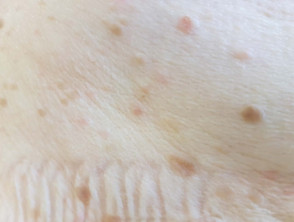
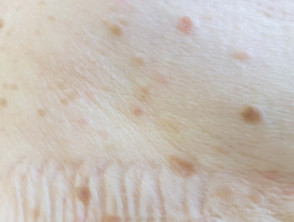
- The appearance of multiple tiny papules and vesicles, which represent reactions to the bites, is common.
Complications Resulting from Bird Mite Infestation
Avian mite infestations can trigger several secondary complications, including:
- Development of secondary Acute bacterial secondary infection caused by constant scratching.
- Significant sleep disturbance due to the intensity of the itching.
- Possible onset of anxiety or depressive symptoms related to the persistent annoyance.
Diagnostic Methods for Avian Mite Infestation
Suspicion of a bird mite infestation should arise when a patient presents with symptoms and clinical characteristics consistent with scabies but shows no improvement with seemingly adequate treatments. For an accurate diagnosis, it is essential to conduct a thorough history, inquiring about the time of year and time of day when symptoms worsen, in addition to knowing the patient's occupation, hobbies, and environmental or housing conditions.
Avian mites are microscopic organisms, imperceptible to the naked eye without magnification. They can be collected using clear adhesive tape and subsequently examined under a microscope. If precise species identification is required, it may be necessary to contact a specialist entomologist, an expert in the study of insects and arachnids.
Key Differential Diagnosis in Cases of Bird Mite Infestation
Differentiating a bird mite infestation from other conditions caused by mites and insects—such as scabies, flea bites, body louse infestations, mosquitoes, sandflies, horseflies, spiders, centipedes, bed bugs, ticks, or harvest mites—can be clinically challenging [3,5]. A crucial distinguishing detail is that, unlike scabies mites, bird mites do not burrow burrows into the skin.
Appropriate Treatment to Combat Bird Mite Infestation
The therapeutic process focuses on identifying and completely eliminating the presence of the mites. Deep cleaning of the skin is essential to remove the parasites.
- It is recommended to vigorously scrub the skin with a vegetable loofah during showering.
- To mitigate itching, you can incorporate emollients into the bath or shower water.
- Coal tar-based products can be used as body wash and shampoo, applied once or twice daily.
- A solution Diluted bleach solution can be used in the shower or bath to reduce the risk of infection (bleach is also commonly used for regular bathroom cleaning).
Prescription Drug Treatments
- Topical steroids are applied directly to the bites to reduce inflammation.
- Oral antihistamines can help reduce both inflammation and pruritus.
- In cases where a secondary bacterial infection has developed, the use of antibiotics is necessary.
Effective Strategies for Preventing Bird Mite Infestation
Primary prevention of bird mite infestation involves proactively eliminating any bird nests found near residential or work areas.
- During the nest removal process, it is mandatory to wear full protective clothing to prevent mite transmission to humans.
- If an infestation is confirmed within a structure, it may be essential to contact a qualified disease control pest control operator.
- To eradicate bird mites from the environment, the affected surface should be treated with an approved insecticide, either in spray spray powder or as an insecticidal.
- It is crucial to consider the destruction and replacement of furniture showing very high levels of infestation.
- Contaminated carpets require daily vacuuming; in cases of heavy infestation, replacement may be necessary.
- Bedding and clothing should be changed and washed frequently using hot water.
Prognosis Following Bird Mite Infestation
Once the presence of avian mites in the environment is successfully eradicated, the subsequent bites and skin manifestations should gradually subside. The key to a positive outcome lies in the complete elimination of the infestation source.