


Insects that deliver painful stings generally belong to the order Hymenoptera. These include several groups known for their ability to inject venom.
The stinging mechanism, present only in the females of these insects, is located in the abdomen. It consists of a venom reservoir and a stinger, frequently barbed or pointed.
A crucial detail is that when a honey bee stings, its barbed stinger detaches from the insect's body along with the venom sac, resulting in the animal's death. Conversely, wasps do not leave their stingers embedded and can therefore sting repeatedly.
A wasp sting usually causes immediate, sharp pain that quickly subsides, although the affected area becomes red, tender, and swollen. This localized irritation, accompanied by itching or pain, can persist for several hours or even days.
The sensation caused by a bee sting is comparable to that of a wasp, but the key difference is that the bee leaves the venom sac embedded in the dermis, allowing for a continuous release of toxins.
Most people experience only mild symptoms after being stung. Nevertheless, it is essential to recognize that some individuals may develop much more severe responses or even potentially fatal reactions.
This is the most common response and is characterized by mild, self-limiting symptoms:
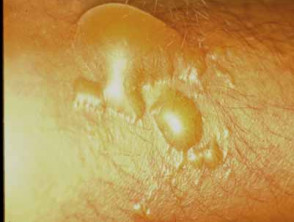
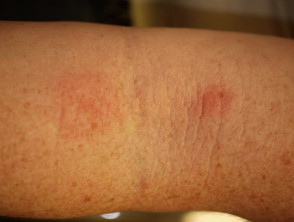
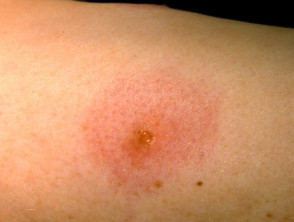
In cases of a large localized reaction, the surrounding area becomes noticeably swollen and very tender to the touch. This swelling can persist for an extended period, from 48 hours up to a full week, and can sometimes be indistinguishable from a skin infection like cellulitis [1].
Although similar reactions are observed after subsequent stings, the risk of developing systemic anaphylaxis from each individual episode remains low, with reported rates below 5% [2].
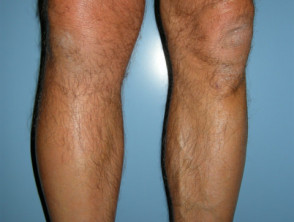
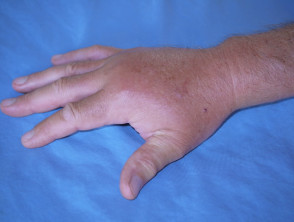
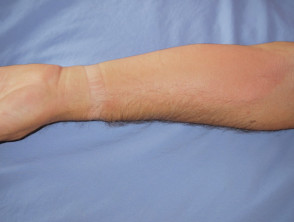
Allergic reactions affecting the whole body (systemic), especially anaphylaxis, are rare but potentially fatal events. These are more likely in individuals who have been previously exposed to the sting, due to a sensitization process sensitization to the insect's venom.
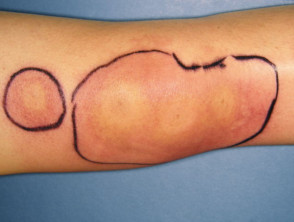
After a bee sting, it is crucial to remove the stinger from the skin immediately. If it is a wasp, it will not leave a stinger, so there is nothing to remove. When attempting to extract a bee stinger, avoid squeezing the venom sac with your fingers or tweezers, as this can inject more toxin. The most recommended approach is to scrape the stinger out using a flat edge, such as the side of a card.
The required medical treatment will depend directly on the severity of the individual's reaction.
A large local reaction, characterized by considerable swelling, might warrant a short course (3 to 5 days) of oral steroids, such as prednisone, under medical supervision.
Any life-threatening reaction or case of anaphylaxis constitutes an immediate medical emergency.
On certain occasions, the after-effects of bee and wasp stings turn out to be extraordinarily long-lasting, persisting for weeks or even months. Cases of symptomatology involving
of Avoidance Strategies for Triggering Factors, sickness disease, neuritis, and encephalitis have been documented, manifesting in the days or weeks following insect stings [3]. There are even reports of secondary parkinsonism and following stings from Hymenoptera [4,5]. Some of these cases have occurred after anaphylactic reactions to the stings. after anaphylactic reactions to the stings.
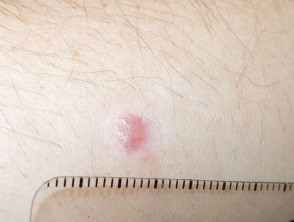
Persistent wasp sting reaction
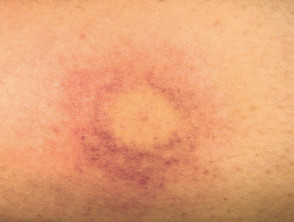
Purpuric wasp sting reaction
Cellulitis and lymphangitis can occur if bacteria bacteria penetrate the break in the skin at the sting site. Such secondary requires antibiotic treatment.
skin tests and serological analyses serological can be performed to determine reactivity and identify those individuals susceptible to more severe reactions after insect stings. This is fundamental for identifying candidates who would benefit from venom immunotherapy (VIT).
Venom Immunotherapy (VIT) is a highly effective treatment to protect individuals allergic to venom from sting-induced anaphylaxis [6]. Generally, it is not advised for adults who only experience skin-limited reactions (e.g., Urticaria, angioedema, or erythema).
Venom immunotherapy is usually administered by an immunologist or allergist. It consists of a series of injections containing a minimal amount of the contact allergen, allergen therapy, in this case, the insect venom. These injections are administered subcutaneously repeatedly over an extended period, frequently several years. The injected venom dose is progressively increased throughout the treatment. Finally, desensitization is achieved, which means the body becomes less reactive to the venom.
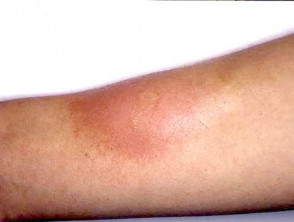
Reaction to honey bee venom from immunotherapy
There are simple measures that can be implemented to decrease the likelihood of being stung by these insects: