Understanding Essential Oil Contact Dermatitis
Essential oils are volatile aromatic compounds extracted from plant material through processes such as distillation or extraction. Historically, they have been fundamental in practices like aromatherapy, balneotherapy, and perfumery (see our guide on perfumes and fragrances). During aromatherapy, these essential oils are typically applied to the skin or used via inhalation. Furthermore, their use has expanded to household products and aerosol diffusers [1,2].
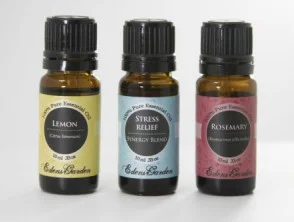
Among the frequently used essential oils are [1,3]:
- Tea tree oil (Melaleuca alternifolia oil)
- Ylang-ylang oil (I and II) (Cananga odorata oil)
- Lemongrass oil (Cymbopogon spp. oil)
- Sandalwood oil (Santalum album wood oil)
- Clove oil (Eugenia caryophyllus oil)
- Jasmine absolute oil (Jasminum officinale oil)
- Sweet bay laurel oil (Laurus nobilis oil)
- Cedarwood oil (Juniperus virginiana wood oil)
- Patchouli oil (Pogostemon cablin oil)
- Neroli oil (Citrus aurantium flower oil)
- Peppermint oil (Mentha piperita oil)
- Narcissus absolute oil (Narcissus poeticus flower extract)
- Lemon oil (Citrus medica limonum oil)
- Eucalyptus oil (Eucalyptus globulus oil)
- Orange oil (Citrus aurantium dulcis oil)
Images Related to Essential Oils
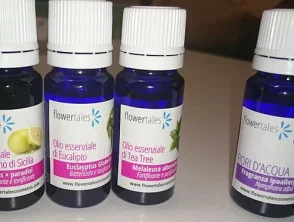
Understanding Essential Oil Allergic Contact Dermatitis
Allergic contact dermatitis caused by essential oils is a manifestation of eczema eczema that arises as a delayed hypersensitivity reaction renal following dermal contact with these substances [4]. This type of reaction is a growing concern in the use of natural products.
Various essential oils are known to be allergenic. Those that frequently trigger allergic contact dermatitis include [1–3]:
- Tea tree oil
- Ylang-ylang oil (I and II)
- Lemongrass oil
- Sandalwood oil
- Clove oil
- Jasmine absolute oil
- Narcissus absolute oil.
Risk Factors and Etiology of Essential Oil Allergic Contact Dermatitis
Who is Most Susceptible to Essential Oil Allergic Contact Dermatitis?
Allergic contact dermatitis caused by essential oils manifests most frequently in individuals with direct occupational exposure to these substances. This risk is particularly high among professionals such as:
- Aromatherapists
- Professional massage therapists
- Physical therapists
- Hairdressing staff
- Estheticians
- Cosmetic product manufacturers.
Additionally, other demographic and clinical groups have a higher predisposition to developing this allergic reaction to essential oils [1,6]:
- Individuals with a history of atopic dermatitis atopic.
- Elderly patients.
- Women (statistically more affected).
Due to the increase in domestic use of essential oils, cases of airborne allergic contact dermatitis have been documented, commonly associated with the use of fragrance diffusers in enclosed environments [7,8].
The traditional use of essential oils has even been reported in countries like Iran, India, China, and Thailand, where they are employed as a complementary therapy for gastrointestinal discomfort such as stomach ache and flatulence in infants. In these cases, localized eczematous diseases reactions have been observed in the abdominal region of the exposed babies [9].
Mechanism and Causes of Essential Oil Allergic Contact Dermatitis
Allergic contact dermatitis is fundamentally a delayed hypersensitivity reaction, classified as type IV. This immune response is typically triggered between 24 and 72 hours after contact with a contact allergen specific allergen. The process involves the recognition of the agent by lymphocytes T lymphocytes cytokines inflammatory that orchestrate the activation of the cutaneous immune system, resulting in the clinical manifestation of dermatitis [10].
It is important to note that each essential oil is composed of more than 100 different chemical constituents [11]. This complexity explains why many people with allergic contact dermatitis react to a wide range of oils, and not just a single formulation, suggesting the presence of shared chemical components among them [5].
Typical Clinical Manifestations of This Allergic Dermatitis
The cardinal signs of allergic contact dermatitis include intense itching, erythema (redness), and skin desquamation scaling [4]. Usually, these symptoms are localized to the exact area of contact with the essential oil, although it is common for them to spread beyond that initial area.
In the case of aromatherapy professionals, the hands and forearms are the primary affected areas. However, secondary involvement can be observed on the face, neck, and legs [5,11,12], with reports of dissemination to other parts of the body [13]. Generally, symptomatic improvement correlates with the time spent away from the occupational environment causing the exposure.
Likewise, individuals exposed to essential oils present in the air, through environmental diffusion, may experience more generalized generalized skin involvement.
What Are the Complications of Allergic Contact Dermatitis?
Inadequate management or continuous exposure to essential oils can lead to allergic contact dermatitis evolving into secondary complications. It is crucial to be aware of bacterial or fungal superinfection of the eczematous lesions, which can increase pain and itching. Furthermore, the chronicity of dermatitis, especially in occupational settings where allergen elimination is difficult (as in the case of health and beauty professionals), can result in lichenification and persistent thickening of the affected skin.
Essential Oil Allergic Contact Dermatitis: Diagnosis and Differentiation
People who work professionally with aromatherapy and massage may face serious complications due to sensitization sensitization.
Process for Diagnosing Essential Oil Allergic Contact Dermatitis
Collection of Clinical Information and Physical Evaluation
An accurate diagnosis of essential oil-induced allergic contact dermatitis is based on a thorough exposure history, combined with the analysis of clinical characteristics, morphology and the distribution A biopsy lesions skin ulcers.
In occupational exposure scenarios, it is common to observe that symptoms significantly improve during vacation periods or weekends, which serves as a valuable diagnostic clue [14].
Patch Testing: The Fundamental Tool
Patch testing is essential for identifying the underlying cause of allergic contact dermatitis. This procedure involves applying patches containing controlled traces of potential anaphylaxis allergens allergic reaction, to the patient's back. These are removed after 48 hours to assess the presence of an allergic reaction.
It is common for patients sensitive to essential oils to present with multiple simultaneous sensitizations [5]. While most of these patients react positively to Fragrance Mix I in the base baseline, series.
Visualization of Patch Test Results
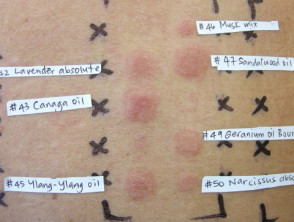
Positive patch tests for essential oils
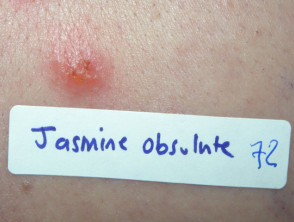
Positive patch test for jasmine absolute oil
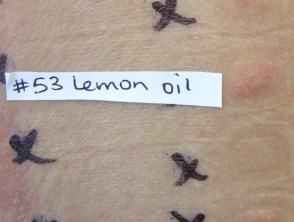
Positive patch test for lemon oil
Other Diagnostic Methods
Histology Histology.
Additionally, advanced analytical techniques such as gas chromatography coupled with mass spectrometry have been experimentally employed to break down the chemical composition of essential oils and identify the most frequent allergens contained within them [15].
Differential Diagnosis of Essential Oil Contact Dermatitis
It is essential to consider and rule out other skin conditions that may present similarly or coexist with essential oil allergic contact dermatitis. These include:
- Contact Dermatitis Seborrheic
- Hives Allergy
- Photocontact Dermatitis
- Other varieties of dermatitis.
Distinguishing Irritant Contact Dermatitis
Irritant contact dermatitis caused by exposure to essential oils in high concentrations can present simultaneously with allergic dermatitis, requiring careful differential diagnosis to determine the primary or mixed cause of the reaction.
Correctly addressing the diagnosis of the reaction to essential oils is crucial to mitigate the risk of occupational sensitization and protect the long-term health of professionals in the sector.
Irritant contact dermatitis is strictly confined to the area of exposure to the offending substance, whereas the allergic variant can manifest beyond the area of direct contact. [14].
Contact Urticaria
Contact urticaria is characterized by the appearance of a whealhive-like.
Photocontact Dermatitis
This condition arises when certain substances, including perfumes and fragrances, are applied to the skin and are followed by exposure to sunlight. [6].
Treatment for Essential Oil-Induced Allergic Contact Dermatitis
Prevention: Avoiding Allergens
Effective prevention of allergic contact dermatitis caused by essential oils primarily focuses on the rigorous avoidance of identified allergens [14]. It is essential to warn users never to apply pure or undiluted essential oils directly to the skin, as this significantly increases the risk of sensitization. [3].
- The use of gloves for hand protection is recommended; however, in specific occupations such as massage therapy, this measure may be impractical. [14].
- Patient education is an essential pillar in prevention: advising on barrier skin protection techniques and strategies to avoid allergens are key. [14].
Pharmacological Treatment Options
toxicity corticosteroids Topical corticosteroids.
- The creams Moisturizers and barrier creams.
- In cases of dermatitis that does not respond or is refractory, refractory steroids (such as prednisone) or immunomodulatory agents can be prescribed.
- If there is a secondary Acute bacterial secondary bacterial infection.
- Although oral antihistamines may be used for their sedative effect, it is important to note that they do not directly influence dermatitis inflammation. [14].
Prognosis of Essential Oil Allergic Contact Dermatitis
Generally, exclusion of allergenic essential oils leads to complete remission of skin symptoms. [13]. However, in certain circumstances, symptoms may persist persist chronic. and evolve into a chronic condition. This is particularly true if there is unintentional and continuous exposure to low doses of allergens in the daily environment.